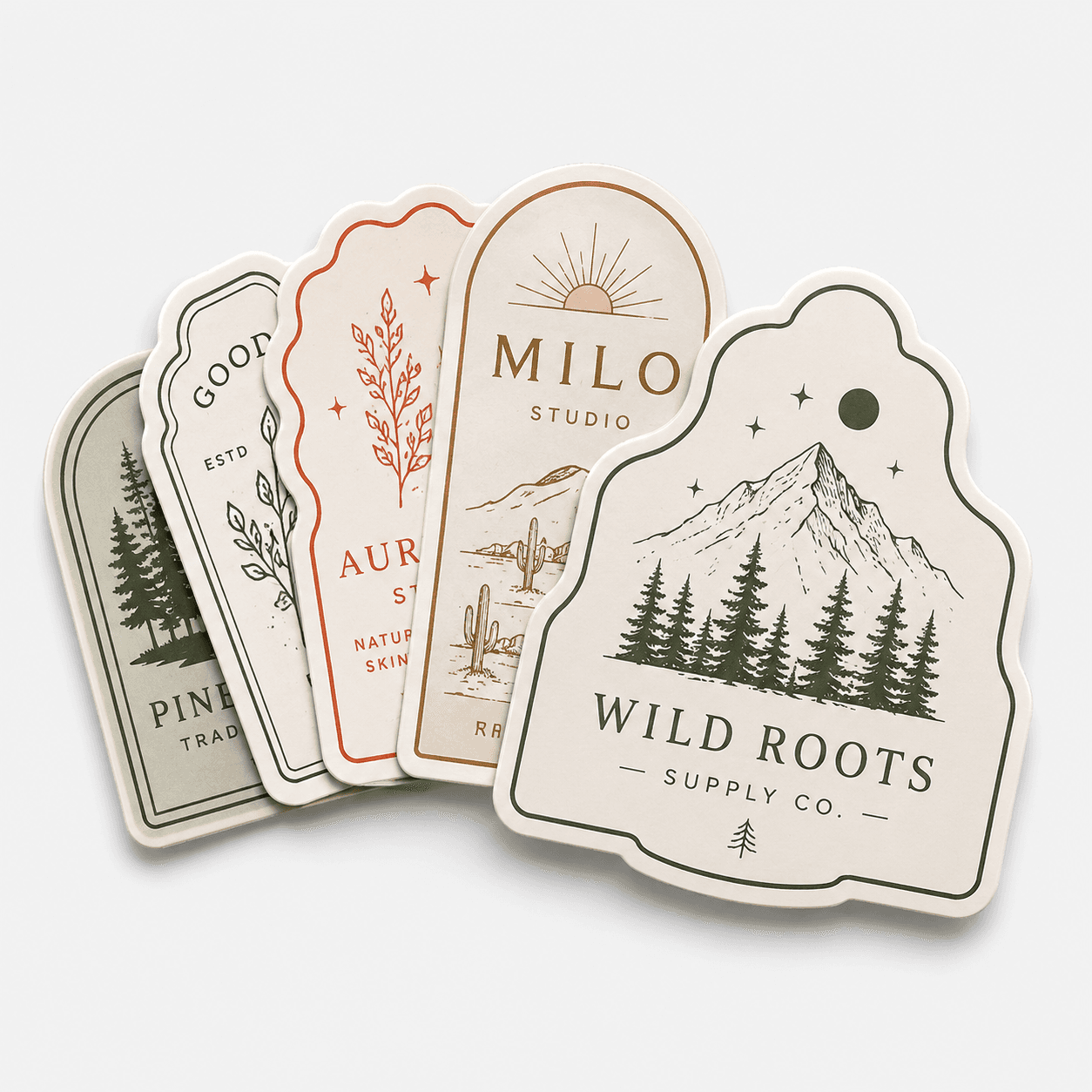
Choosing the right sticker material is the single biggest decision that affects how your stickers look, how long they last, and how much they cost. Most of the questions we get from new customers boil down to the same thing: should I print on vinyl or on paper? This guide walks through the trade-offs so you can pick with confidence.
The short answer
If your stickers will live outdoors, get wet, or end up on a product that customers handle, choose vinyl. If your stickers are going on packaging that ships once, lives indoors, and only needs to look great on the shelf, paper is often the smarter spend.
What vinyl stickers do best
Vinyl is a thin, flexible plastic film with a strong adhesive backing. It is the workhorse material for custom stickers because it is durable, water resistant, and conforms to curved surfaces like water bottles, laptops, hard hats, and toolboxes.
Reasons people pick vinyl:
- Water resistant and dishwasher friendly on most surfaces
- UV resistant when paired with a laminate, so colors stay vibrant outdoors
- Tear resistant, so customers can peel and reposition without damage
- Works on curves: bottles, helmets, bumpers, and rounded packaging
Vinyl stickers are the right call for product labels on reusable containers, branded laptop stickers, outdoor signage, vehicle decals, and any merch sticker a fan might apply to gear that lives outside.
When paper stickers make sense
Paper stickers use a coated paper face instead of plastic. They have a different texture, take ink slightly differently, and cost less per piece at common quantities.
Paper shines when:
- The sticker only needs to look good indoors, on packaging, or in a binder
- You want a softer, more natural finish for craft, food, or apothecary brands
- Budget matters more than weatherproofing
- You want a slightly more recyclable footprint than plastic film
Paper is a great fit for shipping seal stickers, thank you cards, event badges, and packaging accents where the sticker only needs to survive one trip from your warehouse to the customer.
Water resistance: what it really means
Customers often ask if a sticker is "waterproof." The honest answer is a spectrum.
- Standard paper sticker: not water resistant. A splash will smear the ink.
- Vinyl sticker, unlaminated: water resistant. Survives rain, hand washing, and condensation.
- Vinyl sticker, laminated: highly water resistant. Survives the dishwasher, ice baths, and prolonged outdoor exposure.
If you sell drinkware, swimwear, or anything that gets cleaned regularly, go vinyl with a laminate. If you sell candles or dry packaged goods, paper or plain vinyl is plenty.
Finish options
Beyond the substrate, finish changes the feel and shelf appeal:
- Matte vinyl: soft, no glare, great for premium brands
- Glossy vinyl: vivid color, classic sticker look
- Holographic vinyl: rainbow shift, ideal for limited drops and merch
- Clear vinyl: lets the surface show through, perfect for glass and minimalist labels
Pair the finish with your brand voice. Outdoorsy and rugged brands often choose matte. Bright, playful brands win with gloss or holographic.
Quick decision checklist
Ask yourself these five questions before you order:
- Will this sticker get wet?
- Will it sit in sunlight for weeks or months?
- Is the surface flat or curved?
- Does the brand feel premium, playful, or utilitarian?
- How long does this sticker need to last on the product?
If you answered yes to water, sun, or curves, vinyl is the safer pick. If everything is indoors and short term, paper saves money without hurting quality.
Ready to print?
Most of our customers use vinyl die-cut stickers for everything because the durability is worth the small price difference. Take a look at the catalog and order a sample pack so you can feel both materials before you commit.